
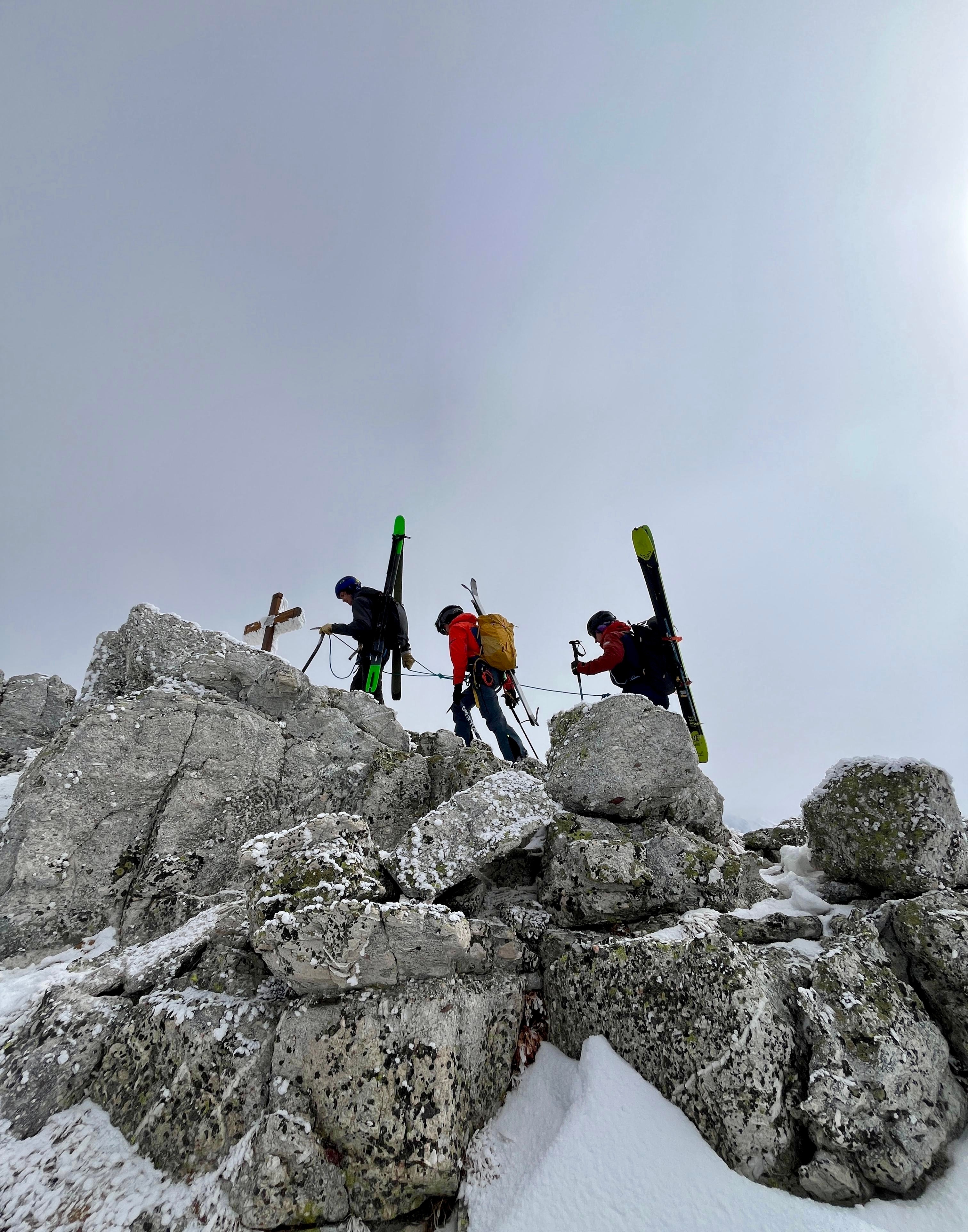
 Skiing and freeriding / Course
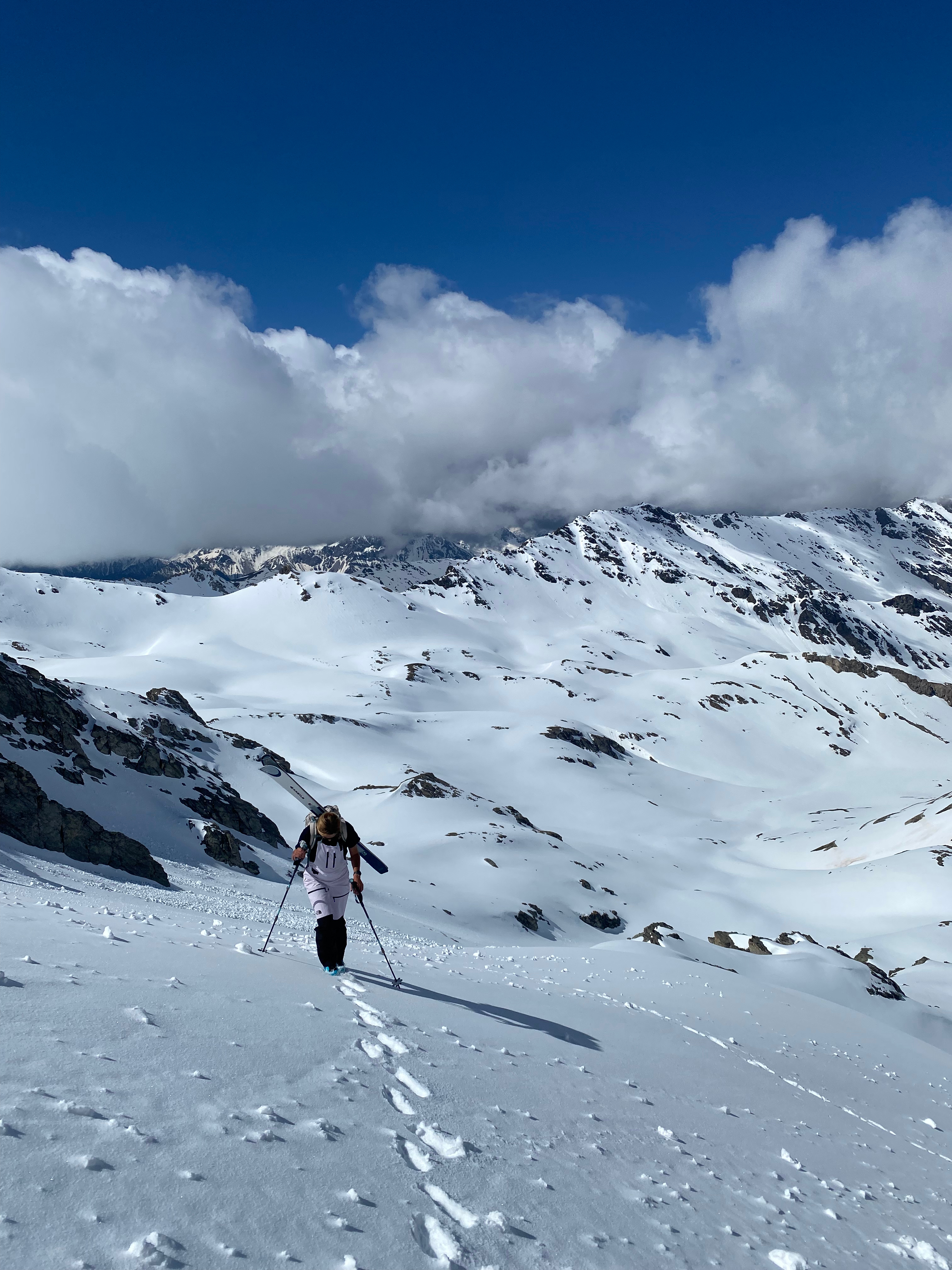 RUNOUT / MOUNTAIN GUIDES
Duration3 days
WhenFebruary and March
WhereAmbin Massif
For whomVery experienced ski tourers, in excellent shape
THE EXPERIENCE
The Ambin Traverse
An advanced ski traverse
THE PATH
The program.
Day 1 – Rochemolles, Punta Sommeiller and Bivouac Sigot
Meeting in Rochemolles and check of the material. From here we will begin the climb along the suggestive Valfredda, until we reach the Galambra Pass (3,078 m). We will continue with a traverse towards the Fourneaux Passes, from which we will go up to Punta Sommeiller (3,333 m).
From the top, a splendid descent awaits us into the valley that once hosted the Galambra glacier, until we reach the Sigot Bivouac, located in a panoramic position over the Susa Valley, where we will spend the night.
Altitude difference: +1,470 m / -400 m
Approximate time: 6–7 hours
Day 2 – Punta Ambin, Col de l’Agnel and Clapier bivouac
We will leave early from the Sigot Bivouac to reach Punta Ambin (3,266 m), a magnificent panoramic point over the entire massif.
From the summit we will descend through the wild Roudelagnera glacier, also known as Glacier d'Ambin, to the slopes of Gran Cordonnier (2,944 m). From here we will regain altitude towards the Col de l'Agnel (3,091 m), and then face a long and satisfying descent to the Vaccarone Refuge (2,743 m).
After a break at the refuge, we will continue towards Col Clapier (2,475 m), where the bivouac that will host us for the second night is located.
Altitude difference: +1,100 m / -1,400 m
Approximate time: 6–7 hours
Day 3 – Malamot and descent to Moncenis
We will leave the bivouac to descend towards Lac des Savines, at the foot of the suggestive Denti d'Ambin. From here we will begin the climb towards Malamot (2,924 m), passing by Colle Giasset (2,693 m).
Once we reach the top, we will enjoy a splendid descent that will lead us to the Moncenisio dam (1,974 m) or, alternatively, to the Piano di San Nicolao (1,728 m), where our crossing will end.
Elevation difference: +700 m / -1,200 m
Approximate time: 5–6 hours
The program is adapted to weather, terrain conditions and group level. Itinerary and logistics are confirmed with the guide before departure.
THE DETAILS THAT COUNT
Practical information.
Who is it aimed at?
For highly experienced, fit and self-reliant ski tourers. You need:
- excellent skiing technique on all types of snow, even on steep slopes: the route has technical sections up to around 40°
- adequate training for several consecutive days of fatigue, with a heavy backpack and high altitudes
- experience of ski touring at high altitude and movement with crampons and rope
- ability to manage mental as well as physical fatigue: days away from everything, weather that can change, limited possibility of return and to be evaluated with the guide based on terrain and conditions
Where do you sleep and eat?
Two nights in a bivouac, in basic rooms and without heating. There are no meals served: everyone brings their own food for three days, a sleeping bag and everything they need to be self-sufficient.
When?
The best period is between February and March, when high pressure conditions are more likely and the nights, in the bivouac, are not too cold. The date is chosen based on the weather and snow conditions.
BEFORE YOU LEAVE
Your pack,
made simple.
Mandatory equipment
- skis, bindings and ski touring boots
- climbing skins and ski crampons
- ski poles
- helmet
- avalanche transceiver, shovel and probe
- crampons, ice axe and harness
- backpack suitable for heavy loads for three days
- warm sleeping bag, food, clothing for very low temperatures
If you are missing something, tell me when you sign up and we will organize the rental.
KEEP EXPLORING
Another
horizon.
More experiences on similar terrain.
Skiing and freeriding / Course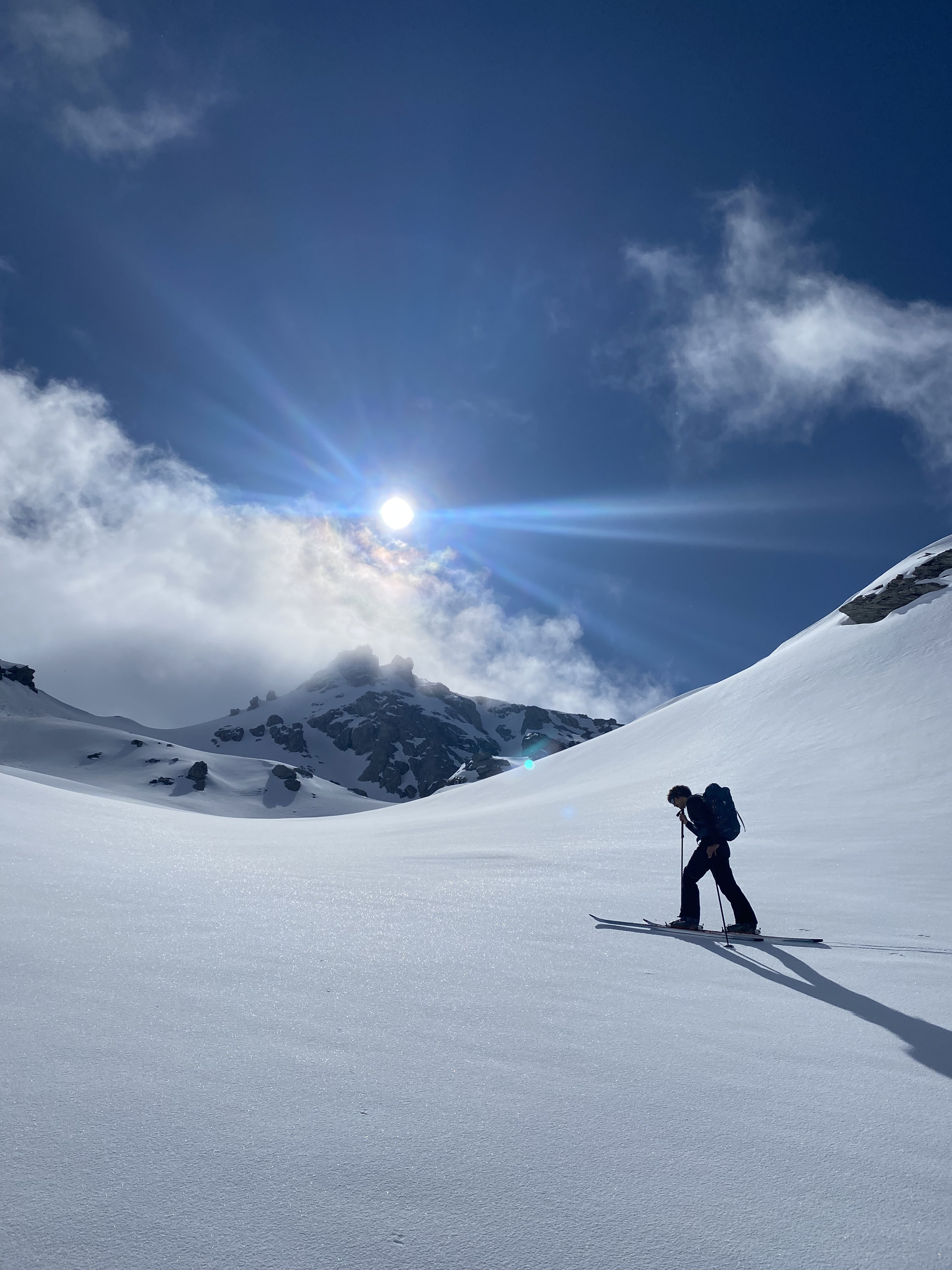 Skiing and freeriding / Course